The Lymphatic System: A Complete Guide to How Your Body Drains and Protects Itself
Most people go their whole lives without thinking about their lymphatic system — until something feels off. Puffy ankles by evening, rings that fit differently depending on the time of day, or a general sense of heaviness that wasn’t there a few years ago. These are often signs pointing back to one quiet, overlooked network: the lymphatic system.
This guide breaks down what the lymphatic system actually does, why it can slow down, and what you can do to support it — including where herbal supplements like LymphFlow fit into the picture.
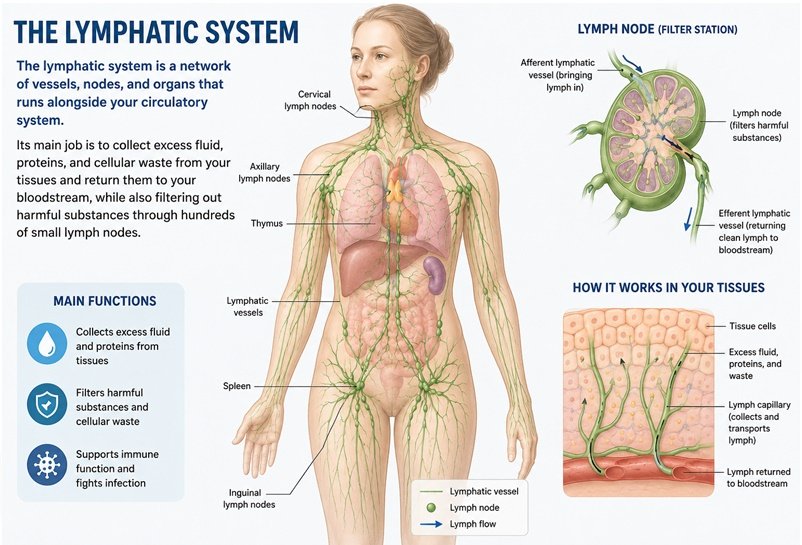
What Is the Lymphatic System?
The lymphatic system is a network of vessels, nodes, and organs that runs alongside your circulatory system. Its main job is to collect excess fluid, proteins, and cellular waste from your tissues and return them to your bloodstream, while also filtering out harmful substances through hundreds of small lymph nodes.
Beyond drainage, the lymphatic system is a core part of your immune system. Lymph nodes act as checkpoints where white blood cells identify and respond to bacteria, viruses, and other threats before they can spread further through the body.
How the Lymphatic System Works
The system is made up of several key parts working together:
- Lymphatic vessels — a network of thin tubes that carry lymph fluid throughout the body, similar to how veins carry blood.
- Lymph nodes — small, bean-shaped structures found in clusters (neck, armpits, groin) that filter lymph fluid and house immune cells.
- Spleen — filters blood and helps recycle old red blood cells while supporting immune response.
- Thymus — where certain immune cells (T-cells) mature, especially important earlier in life.
- Tonsils — lymphoid tissue that helps guard against pathogens entering through the mouth and throat.
Why the Lymphatic System Doesn’t Have a “Pump”
This is the detail most people don’t realize: unlike your circulatory system, which has the heart as a dedicated pump, the lymphatic system has no central pump of its own. Lymph fluid moves largely because of:
- Skeletal muscle contractions during movement and walking
- Deep breathing, which creates pressure changes that help draw lymph upward
- One-way valves inside lymphatic vessels that prevent backflow
In short, your lymphatic system relies on you moving to function well. This is a big reason why sedentary routines are so closely linked to complaints like puffiness and heaviness.
What Happens When Lymphatic Flow Slows Down
When lymph fluid isn’t being circulated efficiently, it can begin to accumulate in tissue rather than being cleared and returned to the bloodstream. Commonly reported signs include:
- Puffy ankles or feet that worsen throughout the day
- Rings or shoes that feel tighter by evening
- A heavy, achy, or sluggish feeling in the legs
- Waking up with a puffier-looking face
- Hands or feet that swell more in heat or after long flights
- General afternoon fatigue or a “foggy” feeling
It’s worth noting that mild, symmetrical puffiness like this is different from lymphedema, a distinct medical condition involving chronic, often one-sided swelling that requires diagnosis and treatment from a healthcare provider. If you notice persistent, one-sided, or painful swelling, see a doctor rather than relying on lifestyle changes or supplements alone.
Common Causes of Sluggish Lymphatic Flow
Several everyday factors can contribute to slower lymphatic circulation:
- Prolonged sitting or standing — long hours at a desk or on your feet reduce the muscle-pump action lymph fluid depends on.
- Dehydration — lymph fluid is largely water-based; inadequate hydration can make it more sluggish.
- Tight clothing — restrictive waistbands or footwear can physically compress lymphatic vessels.
- Low overall movement — a lack of regular walking, stretching, or exercise reduces natural lymph drainage.
- Heat and long travel — both are commonly associated with temporary fluid retention in the extremities.
Natural Ways to Support Lymphatic Health
Because the lymphatic system depends on movement rather than a pump, most supportive strategies revolve around encouraging circulation:
- Move regularly — short walks, stretching, or light rebounding exercises are commonly recommended.
- Stay hydrated — adequate water intake supports fluid balance throughout the body.
- Elevate your legs — elevating feet above heart level for 10–15 minutes can help fluid move back toward the torso.
- Dry brushing or massage — some people use gentle brushing or manual lymphatic drainage massage toward the heart.
- Herbal support — certain plant extracts, such as those found in LymphFlow, have traditionally been used to support healthy circulation and fluid balance as part of a daily routine.
When to See a Doctor
Occasional, mild puffiness tied to long days, heat, or travel is common and usually not a cause for concern. However, you should consult a healthcare provider if you experience:
- Swelling in only one limb
- Swelling that doesn’t improve with rest or elevation
- Pain, redness, or warmth in the swollen area
- Sudden or severe swelling
These statements are for educational purposes only and are not intended to diagnose, treat, cure, or prevent any disease.
Frequently Asked Questions
What does the lymphatic system actually do?
It drains excess fluid and waste from tissues, returns it to the bloodstream, and filters harmful substances through lymph nodes as part of your immune defense.
Why do my legs feel heavy by the end of the day?
This is often linked to lymph fluid and blood pooling in the lower body after long periods of sitting or standing, since the lymphatic system relies on movement to circulate fluid efficiently.
Can diet and lifestyle affect lymphatic drainage?
Yes. Hydration, regular movement, and avoiding prolonged immobility all play a role in supporting healthy lymphatic flow.
Is lymphatic swelling the same as lymphedema?
No. Everyday, mild, symmetrical puffiness is common and often lifestyle-related. Lymphedema is a distinct medical condition that requires diagnosis and care from a healthcare professional.
Can supplements support the lymphatic system?
Some herbal ingredients have traditionally been used to support healthy circulation and fluid balance. Supplements like LymphFlow are designed to complement — not replace — movement, hydration, and a healthy lifestyle.
Get LymphFlow With a Special Offer from Official Website!
This article is for general educational purposes and has not been evaluated by the Food and Drug Administration. It is not intended to diagnose, treat, cure, or prevent any disease. Always consult your physician before making changes related to a medical condition.